
Founder to Founder: Becca Millstein, Co-Founder and CEO of Fishwife
Building a Sustainable Supply Chain, One Sourcing Decision at a Time
Sustainability is one of the most claimed and least defined words in food. In seafood it is also one of the hardest to actually deliver on, because the answer changes with every species, every region, and every year.
Becca Millstein cofounded Fishwife during the height of the pandemic with a straightforward goal: make ethically sourced, premium tinned seafood a staple in every American cupboard. She came to it from outside the industry, having spent her early career in brand partnerships and marketing in music before pivoting to the seafood business. What she found was that sustainability in seafood is not a box to check but a moving set of questions about catch method, fishery health, aquaculture practice, feed inputs, and the carbon cost of getting any of it to shore.

Two years in, Fishwife has grown more than 170% in its second year, 96% of it organic, with coverage in The New York Times, Vogue, and Food & Wine along the way. The supply chain behind that growth was built one sourcing decision at a time.
In Dwight's latest Founder to Founder, Becca talks about what seafood sustainability actually requires, why transparency is the only honest way to market it, and how outsider founders can borrow the technical expertise they don't have.

How does sustainability play a role in your business?
We built our products and our supply chain with sustainability at the forefront, though I don’t think that’s uncommon for new businesses. What is unusual is how multifaceted seafood sustainability is. Every time we develop a new product, we’re embarking on an entirely new sustainability journey.
For a wild product, we have to consider the region of catch, the species, the catch method, and the state of the fishery, which can change from year to year. For farm-raised fish, it’s the aquaculture method, the feed inputs, every element of animal husbandry, and the list truly goes on. Then there’s the carbon impact of transporting it from the source.
That’s where most of our sustainability-minded energy goes these days: making sure we can stand behind the specific fish we’re sourcing, and how we’re sourcing it.
With so many brands tackling sustainability, how do you recommend conveying brand authenticity?
If your brand is doing things sustainably (whatever that means in your particular category), tell the truth, and your practices should speak for themselves. We’re still very much learning how best to tell our own sustainability story, but the tack I’ve taken is transparency: where every fish comes from, who catches it and how, who farms it and how.
Any recommendations for businesses that want to operate sustainably, but don’t know where to start?
Reach out to experts in your industry and make them your mentors. I could not have built our supply chain without sustainable seafood experts like Jennifer Bushman and Jack Cheney in my corner. Many founders are outsiders in their new industries, which brings a fresh perspective and is a good thing, but you can’t get a PhD in marine science while starting up a business. You’ll need access to someone who has one.
Key Takeaways…
- Sustainability gets defined at the input level, not the brand level. Every new product restarts the evaluation, and different inputs in the same line carry different criteria that rarely line up cleanly. A single blanket claim across a portfolio is usually overclaiming. The discipline is knowing what you can actually defend, product by product.
- Transparency is the strategy, and borrowed expertise is what makes it possible. Rather than marketing sustainability as a claim, Fishwife publishes the specifics of every source and lets the practices speak for themselves. Getting to that level of detail usually means leaning on mentors with real technical credentials, especially for founders who are outsiders in the industry they’ve entered.
About Fishwife
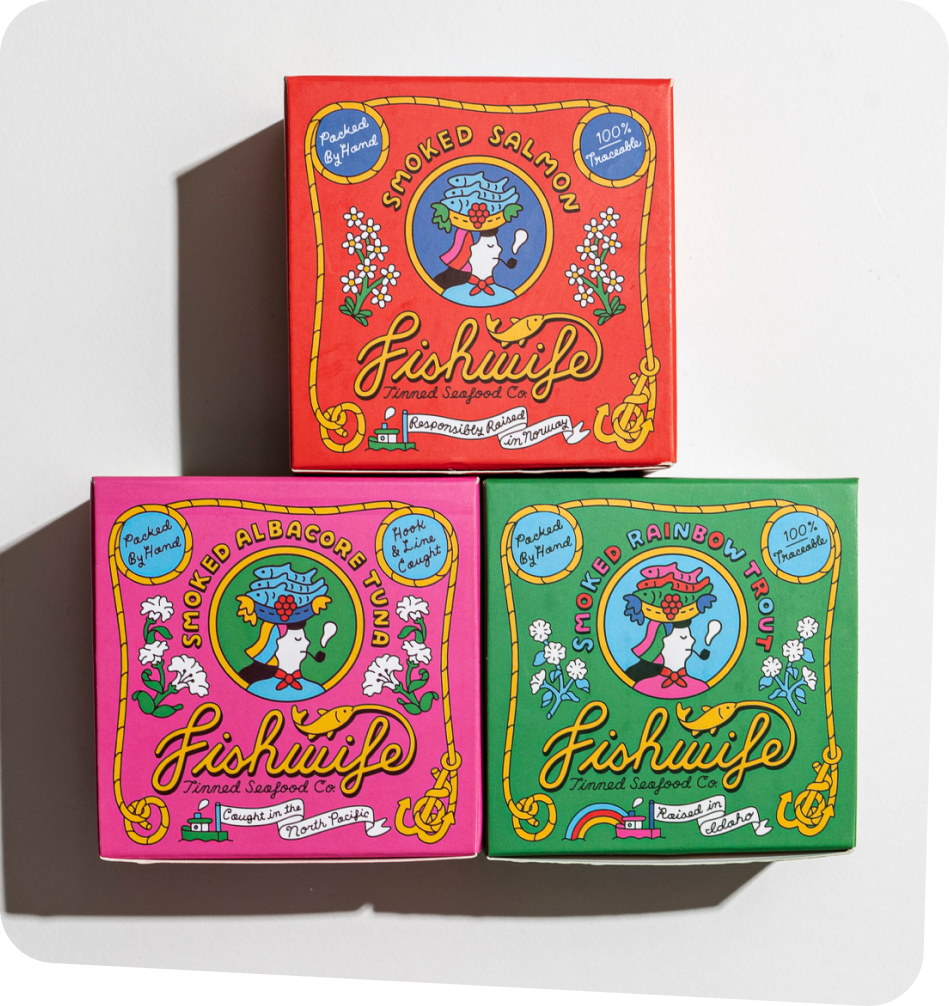
Fishwife is a women-founded and led food company aiming to make ethically sourced, premium, and delicious tinned seafood a staple in every cupboard. The company sources from responsibly managed fisheries and aquaculture farms to bring the vibrance of conservas culture to the North American table. Launched during the height of the pandemic, Fishwife grew more than 170% in its second year, with 96% of that growth organic. Fishwife has been featured in The New York Times, Food & Wine, Vogue, LA Times, Vanity Fair, Refinery29, New York Magazine, Epicurious, Condé Nast Traveler, and other publications.
- Launched during the height of the pandemic
- Grew > 170% in second year
- 96% organic growth in year two
About Becca Millstein
Becca Millstein is the CEO and cofounder of Fishwife, the tinned seafood company “leading America’s tinned fish Renaissance.” She worked in brand partnerships and marketing in the music industry before pivoting to the seafood business. She graduated from Brown University in 2016 and has lived in Los Angeles ever since.

About Dwight Funding’s Founder to Founder series
Founder to Founder is Dwight Funding’s interview series spotlighting the co-founders, CEOs, and operators behind some of the most recognizable brands in CPG, food & beverage, and ecommerce. Each conversation unpacks the operating decisions that drove their success: category positioning, retail strategy, distribution, fundraising, and brand-building. The series passes those lessons forward to the next generation of founders.