
Founder to Founder: Eric Skae, CEO of Carbone Fine Food
Building a Premium CPG Brand: Lessons from Rao’s and Carbone Fine Food
Few CPG operators have built one premium brand to category leadership. Eric Skae has done it twice in one category: pasta sauce. Before pasta sauce, he spent 25 years building premium consumer brands in food and beverage, from driving Saratoga’s signature blue bottle into New York’s top restaurants to scaling Rao’s Specialty Foods into the dominant super-premium player in pasta sauce.
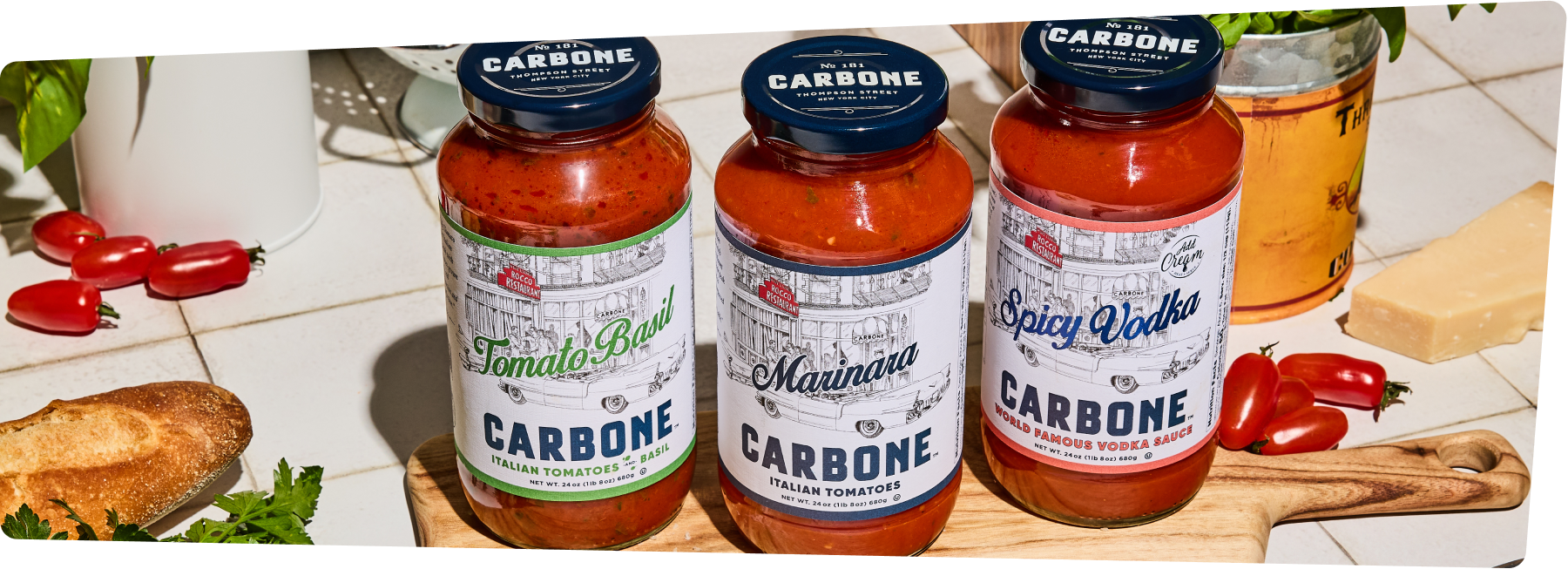
Today he serves as CEO of Carbone Fine Food. Four years after its 2021 launch, Carbone is the fastest-growing national pasta sauce brand in the country, ranks No. 2 in Natural and No. 6 in Grocery, and is the only leading pasta sauce indexing high with both Gen Z and millennials.
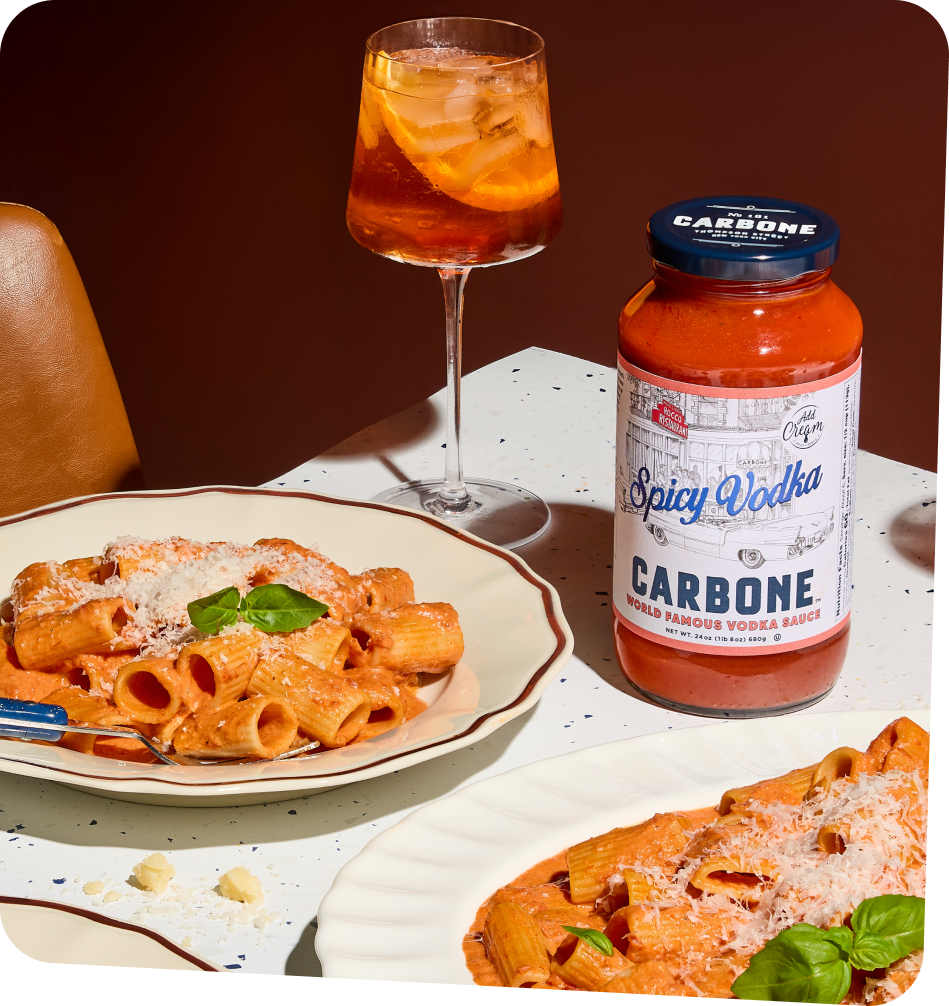
With a goal of building Carbone into a billion-dollar brand, Eric is running the playbook he has been refining for more than two decades: draw a hard line on quality, and stay maniacally focused on what’s working.
In Dwight's latest Founder to Founder, Eric shares what he's learned about positioning, retail, and building a brand in the highest-priced tier of a category.
What did building Rao’s teach you that shaped how you approached Carbone Fine Food?
The biggest lesson was the power of narrow focus. That’s just how my head works. When I was in beverage, my brain was everywhere. You get off a plane and you’re thinking about how to get your product into the airport kiosk. You pass a gym in a cab and you’re thinking about how to get a cooler in there. When I got to Rao’s and it really came down to 33,000 supermarkets plus club and mass, I thought, I could do this. I realized I could take the beverage mentality and apply it to center-of-store: eye level on the shelf, merchandising standards, in-store discipline. That’s when I knew I could win.
Rao’s also showed me category timing. Every category has its premiumization moment. Boomers drove it in ice cream with Ben & Jerry’s, Gen X drove it in beer with craft. Pasta sauce was just starting its moment when I was running Rao’s in 2016, 2017, and millennials were driving it. I knew that consumer wasn’t going back to value, and they’re exactly who Carbone is built for.
How do you define “premium,” and how does that show up in the decisions you’re making day to day?
The way I look at pasta sauce is, zero to $4 is value, $4 to $7 is premium, anything over $7 is super premium. Carbone sits firmly in super premium.
A big part of super premium is sourcing. I haven’t found a domestic tomato that matches the Southern Italian profile (and I’ve tried), so we bring ours in from Italy. Plenty can go wrong sourcing this way: transportation, tariffs, geopolitics. But I won’t compromise the jar to avoid those risks.
You can’t fake super premium. The consumer base understands quality and how food is actually made. At Carbone, we’re sourcing all of our ingredients from Italy, opening number-10 cans of whole-peel tomatoes (29 to 31 per can), hand-stripping basil on site, chopping onions on site, mincing garlic on site. It’s the way we cook at home, just at scale.
How does the conversation with retail buyers change when you’re bringing a premium brand to shelf?
The fundamentals are the same playbook I learned at Arizona Iced Tea: get eye level next to the category leader, put it in a branded glide rack, put up three signs in every store, and back it up with quality service and the story. That works the same whether you’re in beverage or food. Carbone has its own version of that mantra.
The one thing that really changes with super-premium is penny profit. A typical jar of value pasta sauce makes the retailer 50 cents of profit. Yes, they move more jars, but we’re making the retailer significantly more profit on every jar of our super-premium sauce. So we’re talking more about dollars. You don’t put margin in the bank; you put dollars in the bank.
The other piece, at least for Carbone, is who is picking the jar up. We over-index with younger consumers. We’re driving millennials back to the center of the supermarket, which is exactly the consumer a lot of retailers are trying to get back.
What is your advice for founders trying to build a brand in the premium end of a category?
First, understand the WIIFM (what’s in it for me) for everyone along your value chain. The retailer needs to make dollars. The distributor needs their margin. The broker, your team, your marketing all have to get paid. Only after all of that do you get to the consumer, and only after the consumer do you try to make money.
When founders tell me they went out of business because of UNFI or KeHE, I push them to look one layer deeper. Those distributors have operated the same way since day one. It’s the founder’s job to build around that reality.
Second, be disciplined. If your value proposition is working, do not chase shiny objects. The moment things start working, you’ll have a million ideas about what else you could do, and most of them will pull you off the one thing that’s actually driving growth. If you’re at 70% year-over-year, do nothing else. Maniacal focus on what’s working: that’s the lesson I keep coming back to.
Key Takeaways…
- Every category has its premiumization moment. Boomers drove it for ice cream. Gen X drove it for beer. Millennials drove it for pasta sauce. The opportunity is in spotting where the category is going before the rest of the market does.
- You can’t fake super premium. At the highest tier, the consumer knows the difference. That means holding the line on sourcing and prep, even when easier or cheaper options are on the table.
- Maniacal focus is the real moat. Once the value proposition is working, the instinct is to expand. Resist it. Doubling down on what’s already working is what compounds. Chasing what’s next pulls you off of it.
- Understand the WIIFM (what’s in it for me) for everyone along your value chain. Distributors, retailers, brokers, your team, and marketing all need to get paid before you do. The founder’s job is to know how they operate and design the business around it.
About Carbone Fine Food
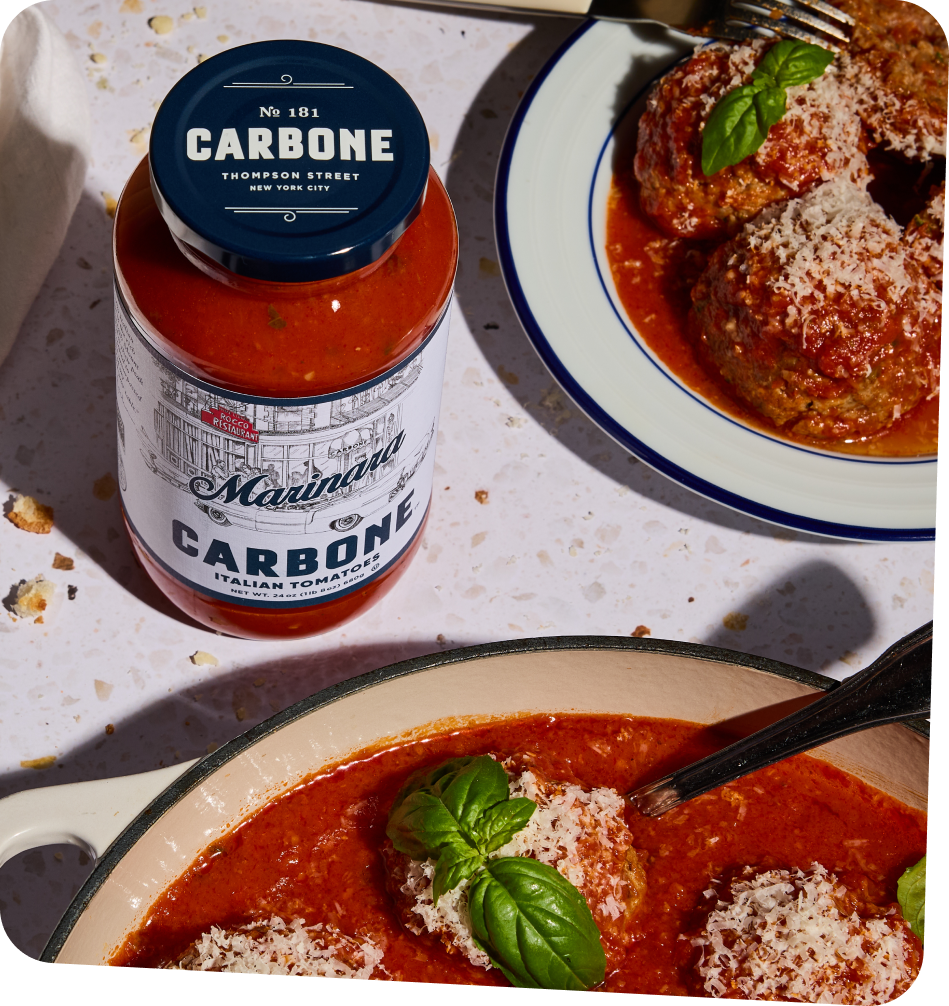
Carbone Fine Food brings the same ingredients and standards that built the iconic Carbone restaurants into a jarred sauce. Tomatoes are grown in volcanic ash and handpicked in Italy, then slow-cooked in small batches using traditional technique. Chefs Mario Carbone and Rich Torrisi oversee the process from sourcing to final taste. Built on the belief that “Dinner is the Show,” the brand brings the energy and precision of the restaurant kitchen home.
For more information, visit www.carbonefinefood.com, and follow along on Instagram, @carbonefinefood.
- Experienced 75.7% YOY business growth in 2025
- Grew $43.6MM+ in volume in 2025
- Tracking in ~30,000 retail doors across the country
- Ranked the #2 pasta sauce brand in Natural and #6 in Grocery
About Eric Skae
Eric Skae is CEO of Carbone Fine Food, the fastest-growing national pasta sauce brand. Since its 2021 launch, he has led Carbone to #2 in Natural and #6 in Grocery on a “food as lifestyle” positioning that bridges pop culture, tastemakers, and social media. His goal: make Carbone a billion-dollar brand.

About Dwight Funding’s Founder to Founder series
Founder to Founder is Dwight Funding’s interview series spotlighting the co-founders, CEOs, and operators behind some of the most recognizable brands in CPG, food & beverage, and ecommerce. Each conversation unpacks the operating decisions that drove their success: category positioning, retail strategy, distribution, fundraising, and brand-building. The series passes those lessons forward to the next generation of founders.